

2025-08-13
In martial arts, combat sports, and multi-purpose training facilities, training areas are not always designed as standard rectangles or squares. Due to columns, wall structures, or space limitations, dojos often include recessed corners or irregularly shaped areas. These conditions place higher demands on mat sizing, layout accuracy, and overall surface flatness when installing roll-out mats.
Before installing roll-out mats, accurate measurement of the training area is essential. Use a measuring tape to measure all edges, corners, and any protruding or recessed sections. Clearly mark the installation boundaries and joint positions on the floor to define the layout in advance.
This process helps determine the correct orientation and placement of each mat, reducing the risk of misalignment during installation. Based on the measurements provided by the customer, QT MAT produces customized templates to ensure each mat fits precisely, allowing smooth installation even in irregular areas.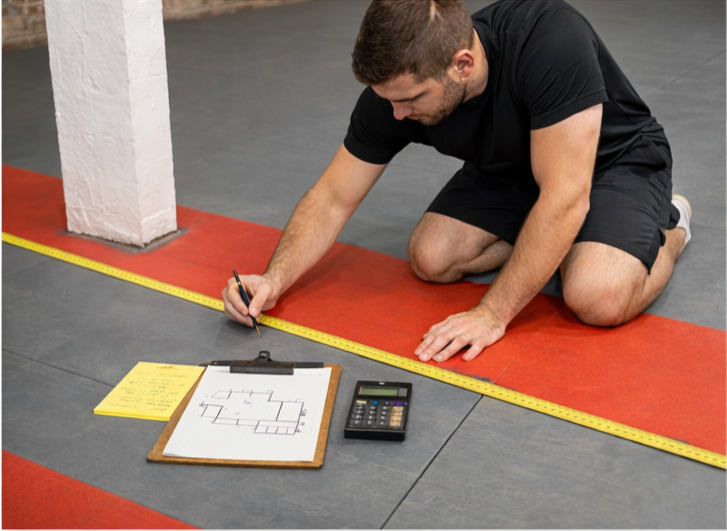
When selecting roll-out mats, it is recommended to match the thickness and material of existing mats to maintain a level training surface and ensure athlete safety. Inconsistent thickness may create height differences at joints, increasing the risk of tripping or unstable footing during training.
QT MAT maintains strict control over mat thickness during production to ensure consistency across all mats. This prevents uneven surfaces. In addition, durable hook-and-loop fasteners are used at the joints, allowing the mats to connect securely without loosening or curling.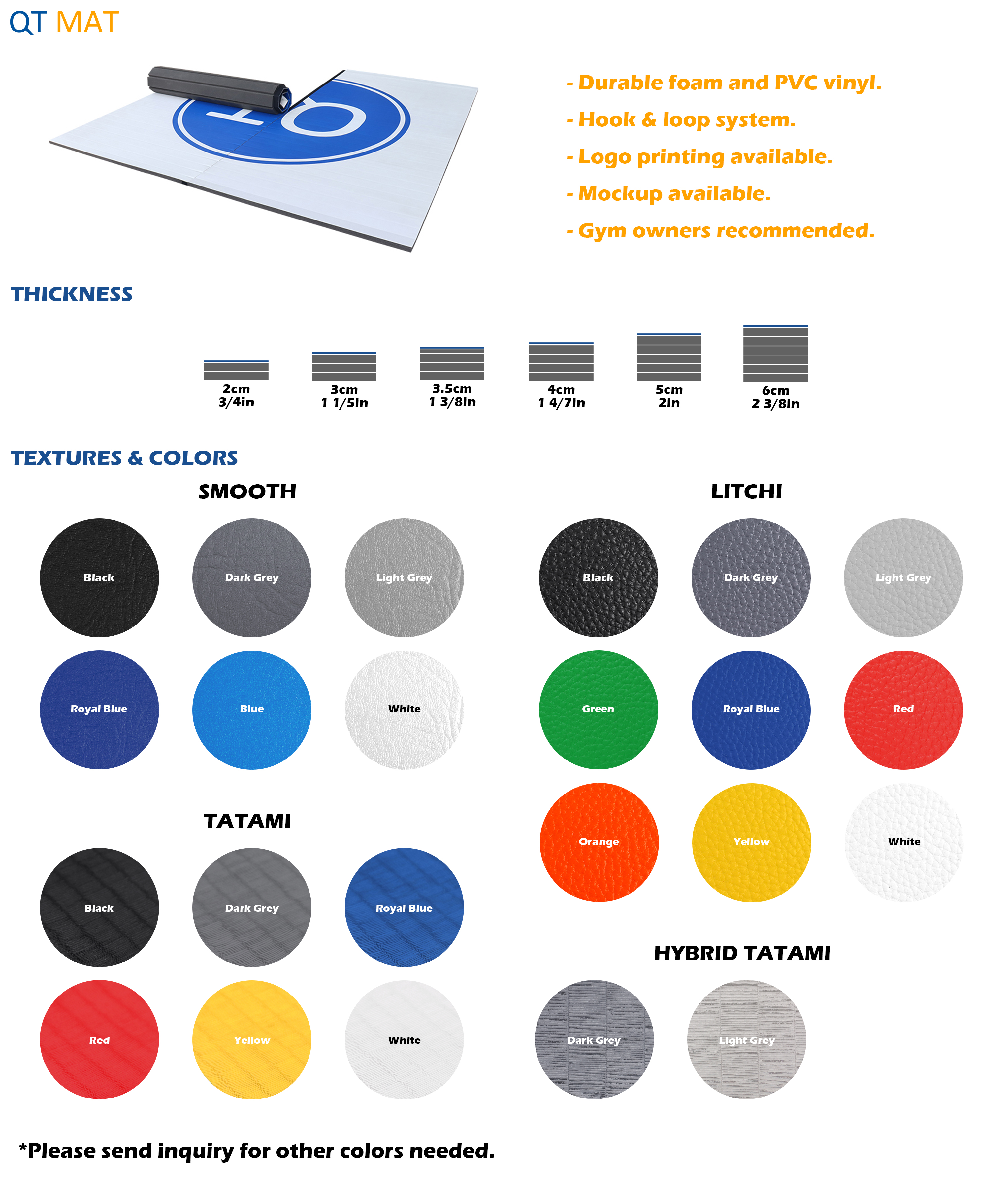
For irregularly shaped training spaces, QT MAT roll-out mats are pre-cut by the manufacturer according to confirmed measurements. On-site installation only requires placing and assembling the mats according to the planned layout.
Each mat is positioned in the marked area, with minor adjustments made at the joints to ensure tight edge alignment. The rollable design allows for flexible handling, making it easier to install mats around corners and complex edges. Once assembled, the mats form a stable and continuous training surface.
After installation, a thorough inspection of the mat surface is recommended. Light walking or stepping across the area can help check overall flatness, slip resistance, and stability.
If slight lifting is observed at edges or joints, adjustments can be made to improve alignment. This final step helps ensure long-term stability and safe performance of the roll-out mats in irregular training areas.
When installing QT MAT roll-out mats in irregular areas, the key steps include accurate site measurement, proper layout planning, factory pre-cut mats, and final inspection and adjustment. With their rollable structure, consistent thickness, and modular design, QT MAT roll-out mats provide a reliable flooring solution for complex training environments.
Click here for more information, or send us your dimensions, thickness, and quantity to receive a free quote within 24 hours.


